
Nutrition support areas
Areas of nutrition support
Most people arrive with a vague sense that something is off and no clear name for it. Below are the topics we work with most often, so you can find the one that matches your situation and see what a consultation would actually cover.
If your concern is not listed, ask anyway. The list is a starting point, not a boundary.
Common starting points
-
Low energy and afternoon crashes
-
Bloating and unsettled digestion
-
Weight and eating patterns
-
Family and children's meals
Start here
Low energy and afternoon crashes
Persistent tiredness has many causes, and nutrition is only one of them. We look at what you eat across the day, particularly whether breakfast and lunch carry any protein, and whether long gaps are leaving you running on caffeine.
Iron, B12, vitamin D, and thyroid function are worth checking with your GP before assuming it is diet. Where food is part of the picture, the changes are usually unglamorous: a proper breakfast, a lunch that is not just a sandwich, and cutting the 4pm biscuit cycle that follows a light midday meal.
Most people notice a difference within two to three weeks, or we look elsewhere.
Read nutrition insightsMorning
Breakfast carries protein, not just toast and tea. The first meal sets how steady the rest of the morning feels.
Midday
Lunch with real substance: something to chew on beyond a sandwich. Long gaps are where caffeine starts doing the work.
Afternoon
The 4pm biscuit cycle usually follows a light midday meal. Fix lunch and the biscuit often stops asking.

Digestive health nutrition
Digestion: bloating, wind, and irregular habits
Bloating and unsettled digestion are the most common reasons people book with us. We start with the basics: meal timing, how fast you eat, fibre type, and whether your fluid intake is mostly coffee.
Constipation and loose stools often respond to straightforward changes before anything more complex is considered. If symptoms suggest a medical cause, we say so and send you to your GP. Coeliac disease, inflammatory bowel disease, and gallstones are not nutrition problems to solve at home.
Our position
- We do not run elimination diets without a clear reason and a plan for reintroducing foods.
- Symptoms that could be clinical are referred to your GP rather than managed as a diet question.
- Straightforward changes come first, before anything more involved is considered.
Weight management nutritionist
Weight and body composition
We do not sell weight-loss programmes, and we will not promise a number on the scale. What we do is help you build an eating pattern you can hold for years, with enough protein and fibre to keep you full and enough structure to stop grazing.
What we build toward
- An eating pattern you can still follow next year.
- Enough protein and fibre that meals actually hold you.
- Structure across the day, so grazing has somewhere to stop.
What we will not do
- Sell a fixed programme with a promised result.
- Promise a number on the scale, or a timeline you did not set.
- Work against medication instead of alongside your GP's advice.
If you have type 2 diabetes, high cholesterol, or high blood pressure, we work alongside your GP's advice rather than instead of it. Where medication is involved, we ask what you are taking so the plan does not work against it. For many people this means losing weight slowly, and for some it means stopping the cycle of loss and regain.

Family nutrition advice
Family and children's nutrition
Family work usually starts with the person who cooks. We look at the meals already in rotation and adjust them rather than introducing a separate menu for one person.
Getting a vegetable into the base of a dish, keeping a protein at breakfast, and having something within reach after school does more than a lecture about five-a-day.
Before you book for a child
A parent or carer joins the consultation, and any concern about growth or weight goes to your GP or health visitor first. We do not put children on restrictive diets.
Working patterns
Eating patterns for shift work
Shift work breaks the usual advice, because "three meals a day" assumes a day that looks the same every week. We plan around your rota: when to eat before a night shift, what to bring that does not need a microwave at 3am, and how to handle the day after a run of nights.
The aim is to reduce the swings in energy and appetite that come with rotating shifts, not to force a nine-to-five eating pattern onto a schedule that does not have one.
- A meal before the shift starts, rather than during it.
- Food that travels and does not need heating at 3am.
- A plan for the first day back on a normal schedule.
Restricted diets
Plant-based and restricted diets
If you eat fully plant-based, or you have cut out major food groups, we check that the plan covers what those foods were providing. A short conversation usually prevents months of guesswork.
We also work with people avoiding foods for medical or religious reasons, and with anyone managing a diagnosed allergy. Allergies need a clear diagnosis before we build around them, so we ask what has been confirmed and how.

Checked most often
B12, iron, iodine, omega-3, calcium, and protein come up most often in these consultations.
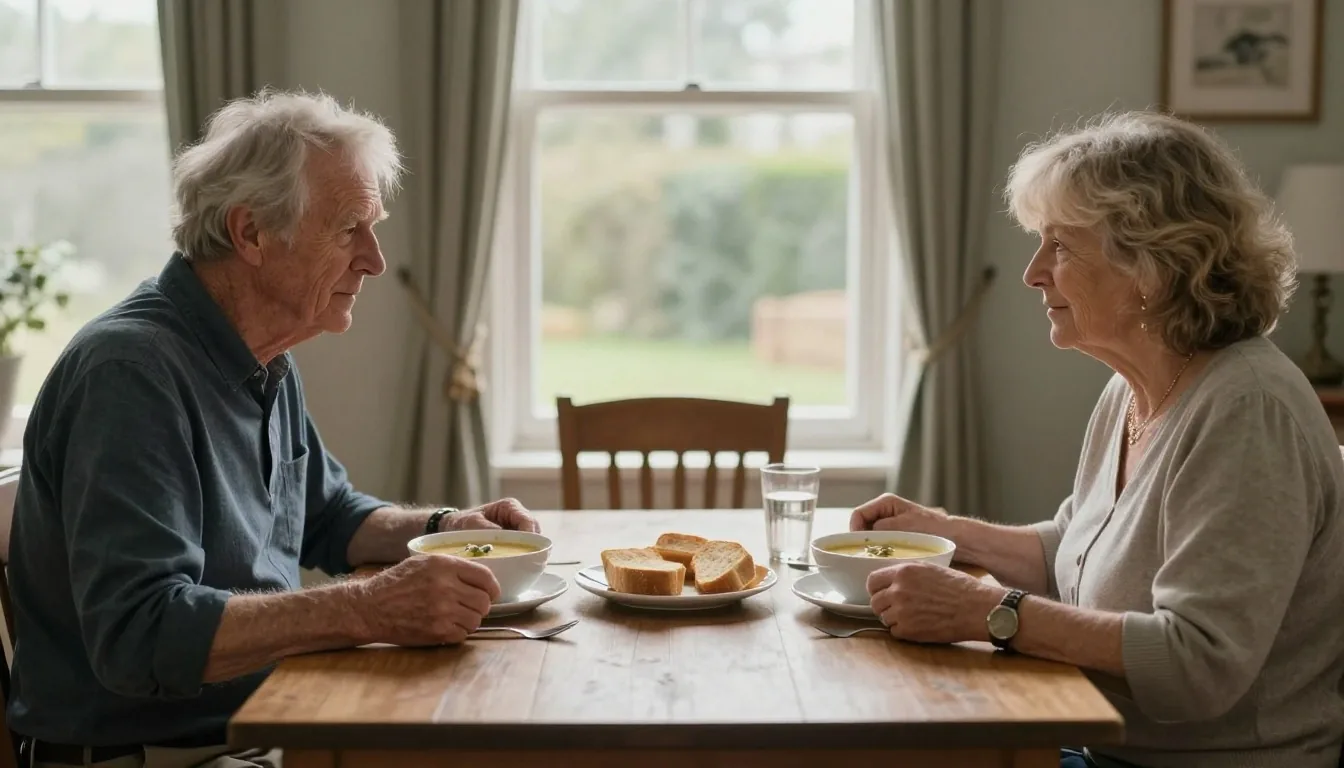
Protein through the day
Older adults and appetite
Appetite tends to fall with age while protein needs stay the same or rise. If meals have got smaller without anyone deciding to eat less, that is worth looking at.
We look at protein at each meal, portion sizes, and whether texture or dental problems are getting in the way. In practice that means rebuilding meals around easy protein sources, adjusting portion sizes to something that still looks appealing, and taking chewing discomfort seriously rather than working around it.
When we refer on
Where there are swallowing difficulties or unintentional weight loss, we refer to a dietitian or speech and language therapist. That is clinical work, and it needs clinical hands.
Before you pick a topic
Not sure which area fits?
You do not have to arrive with a diagnosis or the right words. A short description of what has changed and when is enough for a first consultation.
Ask about your situationWhat actually happens in a first consultation?
We ask what has changed, how long it has been going on, what a normal day of eating looks like, and what you have already tried. From there we agree which area above is closest, and what the first practical changes would be. Nothing is prescribed before that conversation.
Do I need blood tests before booking?
No. Where tiredness could have a clinical cause, we will suggest speaking to your GP about iron, B12, vitamin D, and thyroid function rather than guessing. We do not order or interpret tests ourselves.
Can you work with a diagnosed allergy?
Yes, once the allergy has been confirmed by a clinician. We ask what has been diagnosed and how, then build an eating pattern around it that still covers the nutrients those foods were providing. Suspected but unconfirmed allergies go back to your GP first.
Is my concern too small to bring up?
Small changes are often the ones that hold. If the list above does not match what you are dealing with, describe it anyway. The seven areas are where most conversations start, not the only ones we take.
Where do consultations take place?
All consultations run online by video call, so they fit around work, caring, and shift patterns. Practically, that means you can talk through your week with the person who knows your kitchen, rather than travelling for an appointment. You can read the full walk-through on the how online consultations work page.
Nutrition Pathway Book
Found the area that sounds like you?
Nutrition Pathway Book runs evidence-informed online nutrition consultations across the United Kingdom. Book a consultation and we will start from what you describe, not from a fixed programme.